
Our team at Wing Dental Center realizes that you probably don’t think much about your toothbrush until it’s time to use it. However, that small tool plays a big role in your daily oral health routine. Over time, its cleaning power fades, which might leave you wondering if you are replacing it often enough.
A good guideline is to replace your toothbrush every three to four months, or as soon as you notice the bristles are worn. This simple habit helps you get the most effective clean every time you brush.
The 3 to 4 Month Guideline for a Healthy Smile
The 3–4 month recommendation is a helpful starting point. After hundreds of uses, the bristles on your toothbrush can become frayed and less effective at cleaning away plaque and food particles from your teeth and gums.
Think about the work your toothbrush does twice a day. The bristles bend and flex to get into every corner of your mouth. This repeated motion causes the small plastic filaments to lose their original shape and stiffness, much like a wire bent back and forth too many times.
This general rule applies both to manual toothbrushes and the replaceable heads on electric toothbrushes, as the heads on electric models can wear out just as quickly. You might even notice that your children’s toothbrushes need replacing sooner, as their brushing habits can cause faster wear.
Look for These Signs of Wear & Tear
More important than watching the calendar is paying attention to the condition of your toothbrush. Your brushing habits help determine how quickly it wears out. A quick visual check before you brush can tell you everything you need to know.
You might need a new toothbrush if you see:
- Frayed or Splayed Bristles: When bristles start to spread out or look messy, they can’t clean away stubborn dental plaque properly.
- Bent or Curved Bristles: If the bristles are permanently bent, they lose their ability to reach into the small spaces between your teeth.
- Soft or Clumped Bristles: Over time, bristles can lose their firmness, which reduces their effectiveness at removing debris.
- Discoloured Bristles: If you notice that the bristles have changed colour or look permanently stained, this could be a sign of buildup that is difficult to rinse away.
When to Replace Your Toothbrush Sooner
Sometimes, you need to get a new toothbrush before the three-month mark. It’s good practice to replace your toothbrush after you’ve recovered from a cold, the flu, or another infection.
Continuing to use the same toothbrush after being sick could re-expose you to germs. Plus, replacing your toothbrush is a thoughtful way to protect the health of others in your household, especially if you store toothbrushes together.
Other situations also call for a new brush. If you accidentally drop your toothbrush on the floor, it’s safer to replace it. Likewise, if someone else in your household uses your toothbrush by mistake, getting a new one is a good hygienic practice.
How to Keep Your Toothbrush Clean
Proper care can help keep your toothbrush in good condition between replacements. Following a few simple tips can help you maintain your brush and your oral health.
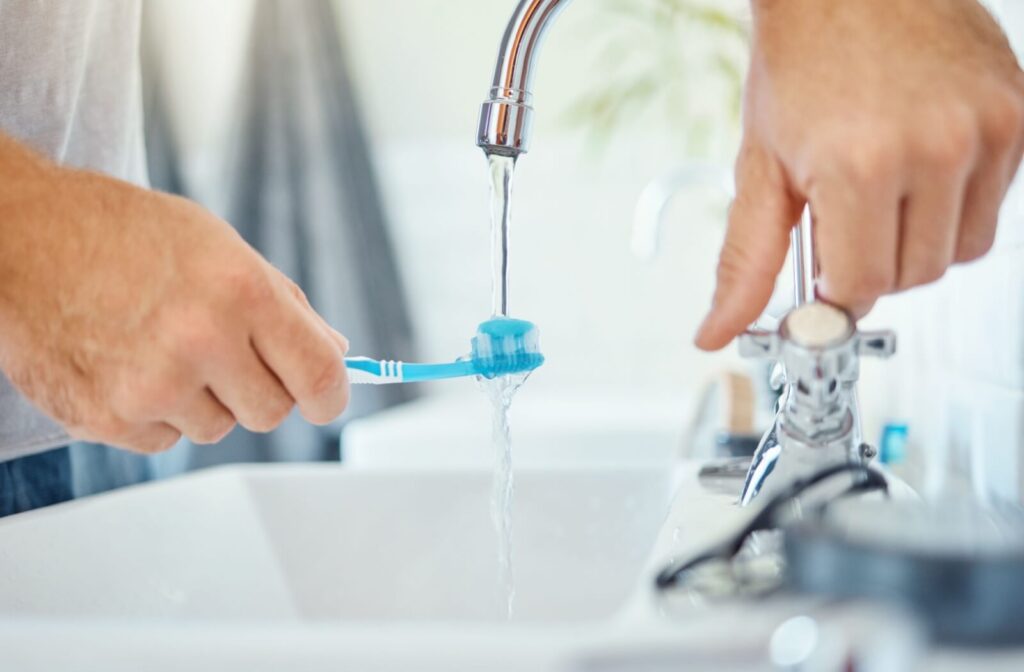
- Rinse It Well: After brushing, rinse your toothbrush thoroughly with tap water to wash away any remaining toothpaste or food particles.
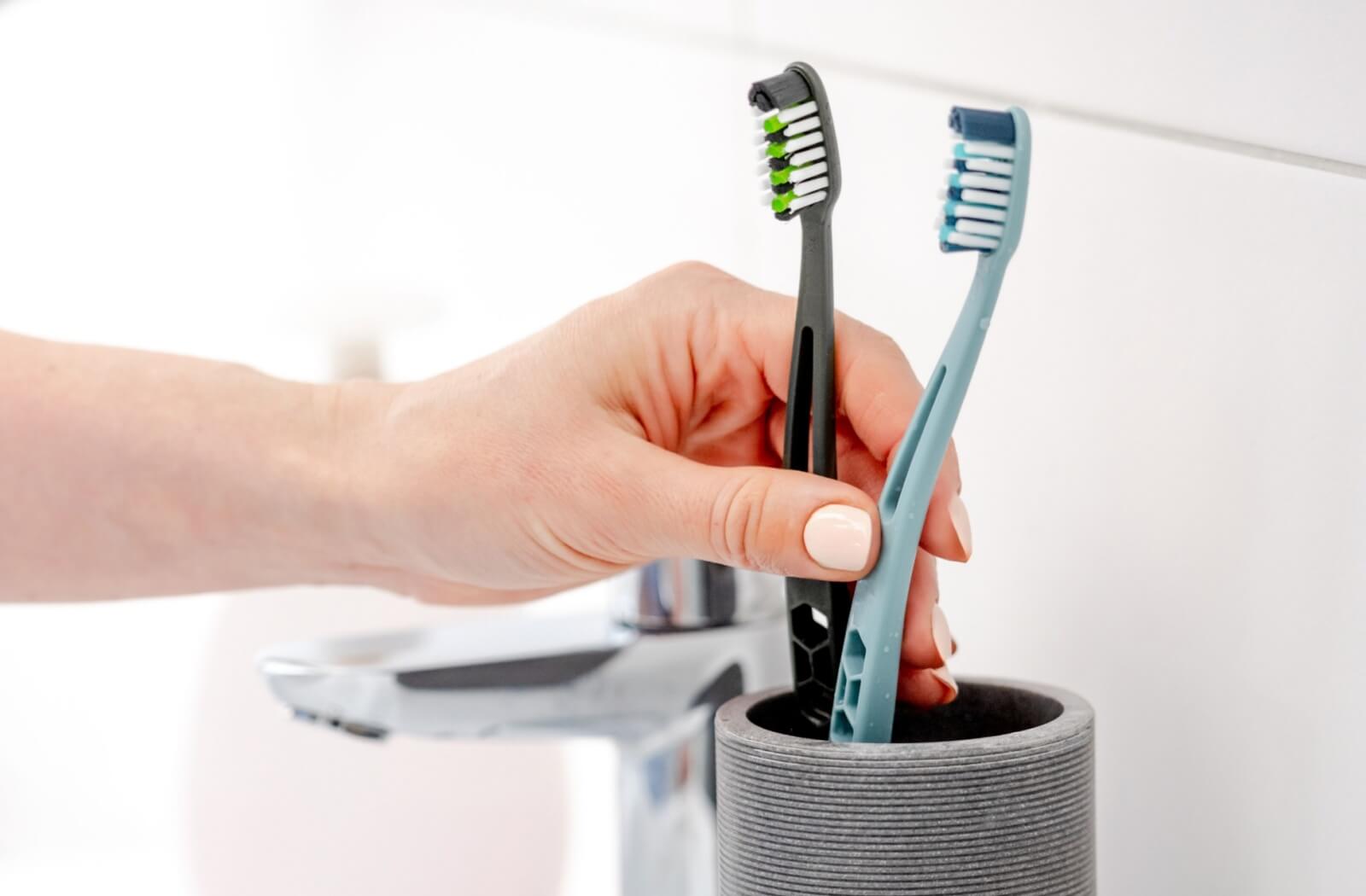
- Store It Upright: Place your toothbrush in an upright position in a holder where it can air-dry completely.
- Avoid Closed Containers: Storing a wet toothbrush in a closed container or travel case can encourage the growth of unwanted microbes.
- Keep It to Yourself: For health reasons, you should never share your toothbrush with anyone else.
The Risks of an Old Toothbrush
Using a toothbrush past its prime can affect your oral health. Worn-out bristles simply can’t do their job correctly. This means plaque can build up on your teeth and along the gumline, which may lead to cavities or gum irritation.
When your gums become irritated, you might notice redness, swelling, or even some bleeding when you brush. These are early signs that your gums aren’t getting the proper cleaning that they need to stay healthy. Ineffective brushing can also contribute to bad breath, as food particles and bacteria are not properly removed.
Combining good at-home habits with regular check-ups is a great approach to oral health. A professional dental cleaning from a dentist in Peace River, AB, can help remove any stubborn plaque and tartar you may have missed.
Remembering to replace your toothbrush is a small but important part of your at-home oral care. This simple step, combined with regular dental visits, helps keep your mouth healthy and your smile bright.
If you have questions about your oral hygiene routine or need to schedule your next check-up, our team at Wing Dental Center is here to help you.