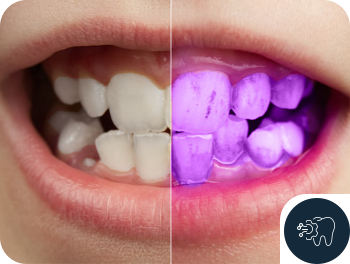


You brush twice a day, so your mouth feels clean by the time you’re done. But there’s a good chance your electric toothbrush still misses that bit of food wedged between two back teeth, no matter how thorough you are.
That gap is where plaque likes to settle in, and it’s why floss matters just as much as your toothbrush. Floss at least once a day to clear away the plaque and food your toothbrush can’t reach. Plaque starts forming again within hours of your last brush, so a single missed spot adds up fast. Skip it too long, and that plaque hardens into tartar, which only a professional dental cleaning can remove.
Why Daily Flossing Actually Matters
Your toothbrush cleans the outer, inner, and chewing surfaces of your teeth, but it cannot clean effectively between them.
Without flossing or another interdental cleaner, more than one-third of each tooth’s surface can go uncleaned.
Daily flossing lifts plaque from between your teeth and along the gumline, the two spots where cavities and gum disease tend to start. Clearing that buildup can help lower your risk of tooth decay and keep your gums firmer over time. It only takes a couple of minutes, and it’s one of the few habits that pays off almost immediately.
Signs Your Gums Want More Attention
Your mouth usually tells you when it needs a bit more care. Watch for:
- Gums that bleed or feel tender when you brush
- Food that gets stuck between the same teeth meal after meal
- Bad breath that lingers even after you’ve brushed
- Gums that look puffy or red instead of firm and pink
- Gums that seem to pull back from your teeth
These signs can happen when plaque builds up, but they can also have other causes. If bleeding, soreness, swelling, bad breath, or gum recession persists, ask your dentist or hygienist to take a look.
Floss First or Brush First? Either Works
Morning or night, it doesn’t matter much. What matters is doing it once a day, without fail.
Some people floss before bed to clear out everything from the day. Others build it into their morning routine instead.
If you want to get the most from both, floss first, then brush your teeth. Flossing first loosens plaque and food between your teeth, so brushing sweeps it away right after. The fluoride in your toothpaste can also settle into those clean gaps more easily this way.
Pick whatever time fits your day, so the habit actually sticks.

How to Floss the Right Way
Good technique makes flossing quick, and it shouldn’t hurt. Here’s how to do it:
- Wrap about 18 inches of floss around your middle fingers, leaving 2 inches to work with.
- Slide the floss between two teeth, then curve it into a C shape against the side of each tooth at the gumline.
- Move it gently up and down a few times to lift the plaque, rather than snapping it against your gums.
- Use a fresh section of floss for each tooth, so you’re not dragging plaque from one gap into the next.
Common Floss Problems & Simple Fixes
A little bleeding can happen when you first start flossing, especially if your gums are inflamed. Keep flossing gently, but if the bleeding does not improve after a few days or happens regularly, ask your dentist or hygienist for advice.
Waxed floss may slide through tight contacts more smoothly, but if floss keeps snagging or shredding in one spot, mention it to your hygienist at your next visit.
They can point you toward a technique or tool suited to your teeth. Gums that stay sore or swollen for more than a couple of weeks are worth flagging too, since that can point to something beyond ordinary plaque buildup.
Floss Alternatives & Options for Braces
Standard string floss isn’t your only option, and plenty of people find it easier to stick with a routine once they find the right tool. If it feels awkward, or you’re working around braces, a few options can make cleaning between your teeth simpler:
- Water flossers rinse out food and plaque with a steady stream of water, which some people find more comfortable than string floss
- Pre-threaded floss picks let you clean with one hand, handy when you’re on the go
- Small interdental brushes work well for wider gaps between teeth
- Floss threaders help guide floss underneath the wire so you can clean around each bracket
They all aim to clean the spaces between your teeth. The best option is the one you can use consistently. If you’ve got wider gaps from gum recession or missing teeth, an interdental brush may be a better fit than string floss.
Make Flossing Part of Your Everyday Routine
Building a new habit takes a bit of trial and error, and that’s fine. Bring your questions to your next visit, and your hygienist can walk you through the technique or tool that fits your teeth best.
Wing Dental Centre welcomes new and returning patients for routine hygiene visits and more involved care alike. Book an appointment and get flossing right, one tooth at a time.